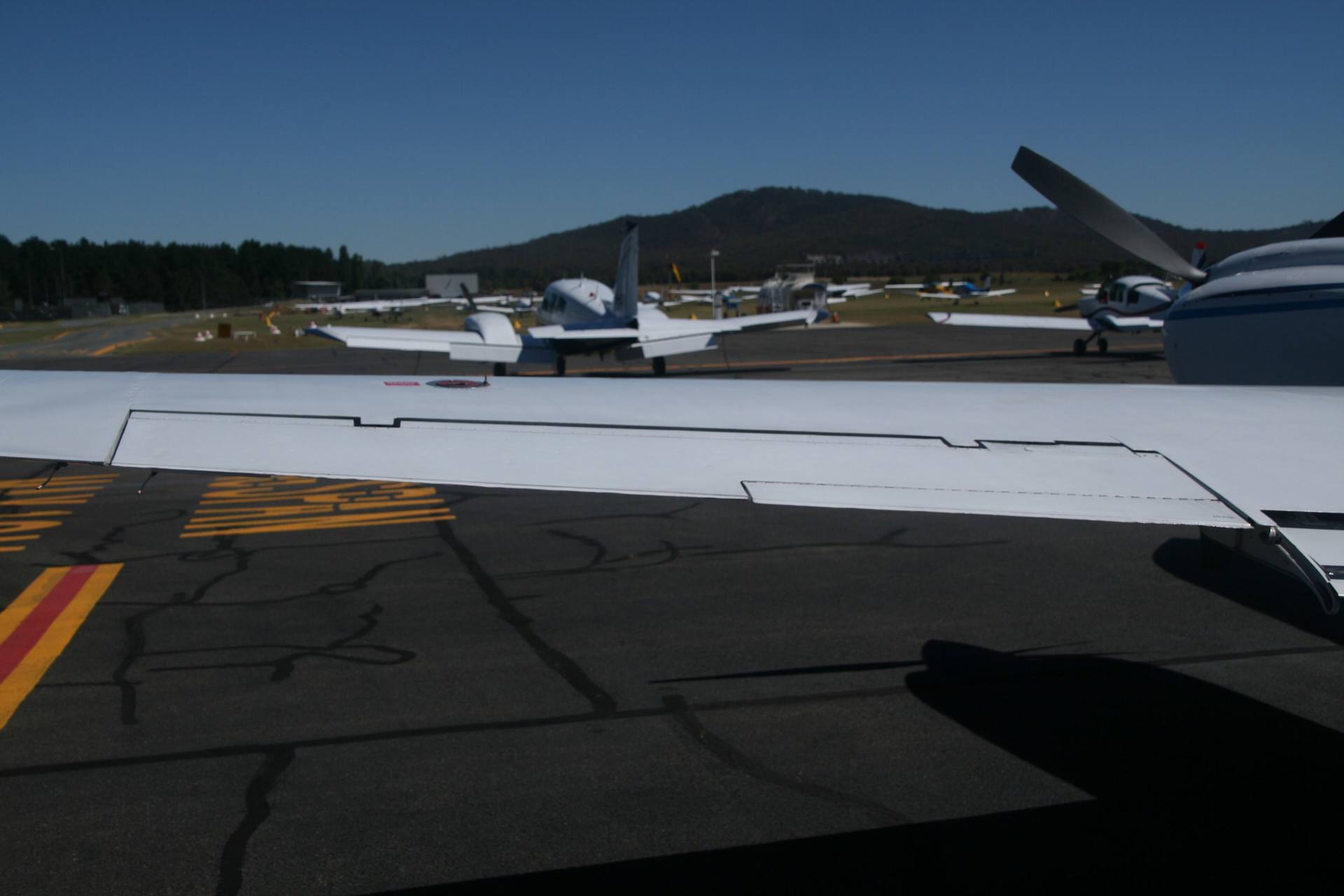
Our process
A careful process, agreed before the work begins.
Aircraft detailing goes well when the scope, the materials, the location and the boundaries are clear in advance. This is the workflow we intend to follow on every aircraft.
A proposed workflow. The steps below describe how we plan to work. The specifics of each job, including location, access and products, are confirmed with the owner or operator before scheduling.
-
Aircraft and scope discussion
Every job starts with a conversation about the aircraft: what it is, how it is used and stored, what condition it is in, and what you want from the visit. A quick refresh before a trip and a thorough first clean after months outdoors are different scopes, and the quote should say which one you are getting.
This is also where boundaries are set. Detailing is cosmetic. If something looks like a maintenance item, it belongs with your mechanic.
-
Manufacturer guidance and material compatibility
Aircraft manufacturers publish handling and care guidance, often in the handling, service and maintenance section of the pilot’s operating handbook, and in maintenance manuals. Paint, transparency, avionics and interior manufacturers publish their own. Where those documents exist, they govern.
When aircraft-specific documentation is not available, the work stays conservative, and that limitation is explained before work is agreed. A product that suits one aircraft or material is not assumed to suit every aircraft.
-
Location, access and facilities
Airports, FBOs and hangar owners set their own rules for outside service providers. Some require insurance certificates, permits or advance notice; some restrict water use or where washing can happen. These are confirmed for each request before anything is scheduled.
On-location service is a proposed model that is still being confirmed. Nothing is assumed about access to any airport, ramp, hangar or wash facility.
-
Documented pre-service condition review
Before work begins, the aircraft’s existing cosmetic condition is recorded with photographs and notes: paint chips, scratches, decal edges, interior wear, stains. The record protects both the owner and the detailer, and gives the next visit a baseline.
A condition review is cosmetic. It is not an inspection and does not assess airworthiness.
-
Sensitive areas and boundaries of work
Pitot tubes and static ports, sensors and probes, vents and drains, seals, transparencies, antennas, control surfaces and their gaps, and avionics are identified before cleaning starts. Protective covers or plugs are used as the owner or operator directs, and every item placed on the aircraft is tracked and removed before handoff.
Areas the operator does not want touched are agreed and respected.
-
Appropriate exterior cleaning
Exterior cleaning method depends on the finish, how soiled the aircraft is, and what the location allows. A traditional wash, a low-water method and a dry wash each have a place. Leading edges, belly and exhaust areas usually need particular attention.
-
Surface-specific cosmetic work
Beyond cleaning, any surface-specific work (for example a sealant on painted surfaces, or brightwork care) happens only when it was agreed in the scope and only where compatible with the surface. Specialized work such as paint correction, polishing and coatings is a proposed offering still being confirmed.
-
Interior cleaning suited to cabin materials
The cabin and cockpit are cleaned with methods suited to each material, and displays only in the way the avionics maker recommends. Seats and panels are not removed, and switches and systems are not operated.
-
Final review and owner handoff
The finished aircraft is reviewed against the agreed scope, ideally with the owner or operator. Protective items are confirmed removed. Anything noticed along the way that falls outside detailing, such as a cracked fairing, a loose seal or a stain that will not lift, is noted for the appropriate professional.
-
Recommended care interval
The handoff ends with a suggested interval for the next visit, based on how the aircraft is stored, how often it flies, who rides in it and the season ahead. It is a recommendation to review together, not a contract term.
Detailing and maintenance
Where cosmetic care ends.
In the United States, maintenance, preventive maintenance and alterations are governed by 14 CFR Part 43 and performed by people authorized to do them. Cosmetic detailing is not a substitute for any of it.
Detailing does not include:
- Moving, towing or positioning the aircraft
- Operating engines, power, avionics or other systems
- Removing panels, fairings, seats or components
- Inspecting for airworthiness, treating corrosion or making repairs
- Returning an aircraft to service
References
General guidance on cleaning, corrosion awareness and the scope of maintenance. Your aircraft's own manuals take precedence.
- Advisory Circular 43.13-1B, Acceptable Methods, Techniques, and Practices: Aircraft Inspection and Repair (FAA)
- Advisory Circular 43-4B, Corrosion Control for Aircraft (FAA)
- Aviation Maintenance Technician Handbook, General (FAA-H-8083-30B) (FAA)
- 14 CFR Part 43, Maintenance, Preventive Maintenance, Rebuilding, and Alteration (eCFR)
Request a quote
Tell us about your aircraft.
Share the make and model, where it is kept, and what you would like done. We will review the details and reply to discuss scope, access and timing.