Aircraft Washing and Detailing: What Is the Difference?
A wash removes soil from the exterior. A detail is a broader, deliberate scope. How the two differ in purpose, areas covered, and the questions to settle first.
NWA Aircraft Detailing Editorial · · 4 min read
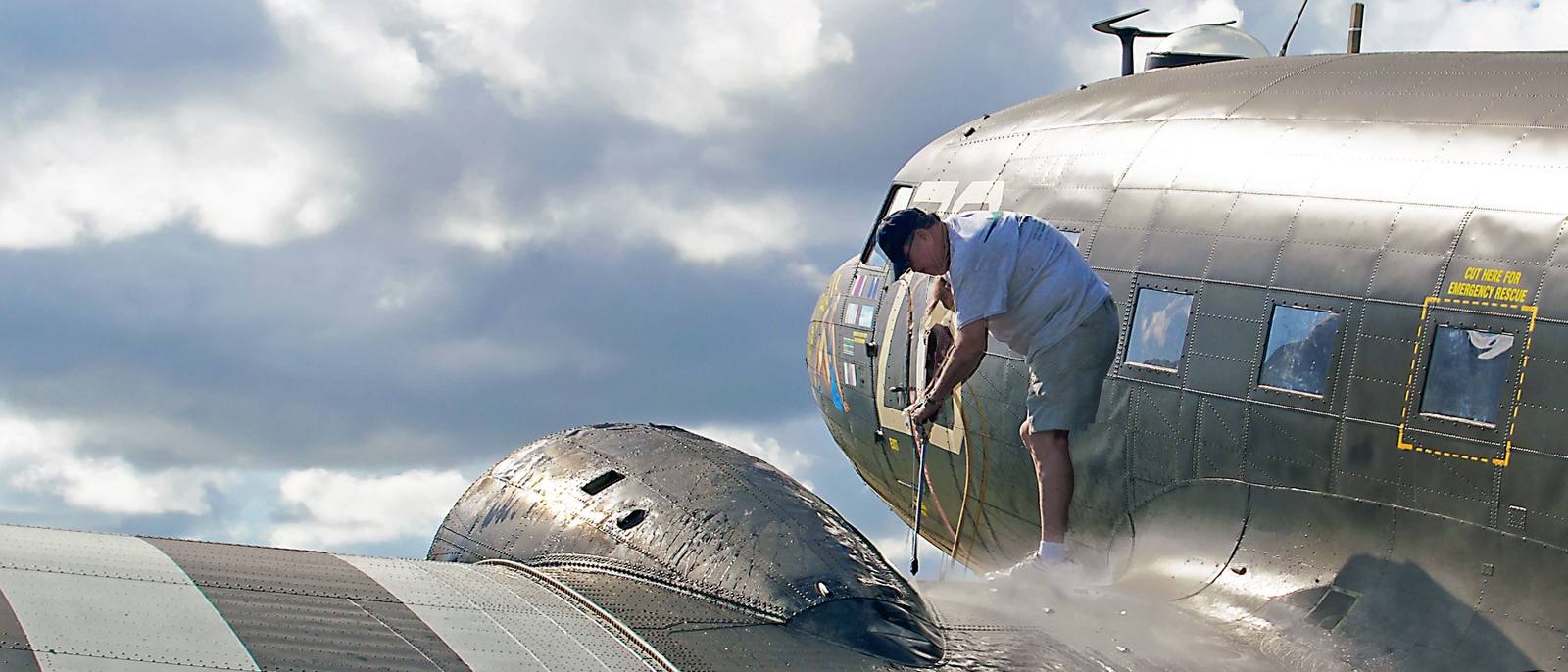
An aircraft wash is a focused job: remove dirt, film, and residue from the exterior so the surfaces are clean. A detail is a broader scope that usually includes a wash but adds deliberate attention to specific surfaces, materials, and areas, often including the cabin. Neither one is maintenance, and both should follow the aircraft manufacturer’s cleaning guidance. The useful question is not which word sounds better, but which tasks you actually want done.
What a wash covers
The FAA’s Aviation Maintenance Technician Handbook describes three ways to clean an aircraft exterior: wet wash, dry wash, and polishing. It describes wet washing as removing oil, grease, carbon deposits, and most soils, with the exception of corrosion and oxide films. That last point matters. A wash removes what is sitting on the surface. It does not change the condition of the paint, the metal, or the transparencies underneath.
A typical exterior wash scope, in plain terms:
- Fuselage, wings, and tail surfaces cleaned of road film, dust, and general airport grime
- Attention to obvious contamination such as bug residue and exhaust staining, within what the agreed method allows
- Transparencies cleaned with methods suited to their material
- Surfaces rinsed or wiped so cleaning products are not left to dry
If you want to understand the waterless alternative, see what owners should know about dry-wash methods.
What detailing adds
Detailing is not a regulated term, so its meaning varies from provider to provider. In general it describes a more thorough, area-by-area approach. Where a wash asks “is the surface clean,” a detail also asks “has each area been addressed in the way its material calls for.” Depending on the agreed scope, that can mean:
- Closer work on the belly, wheel areas, exhaust tracks, and leading edges
- Cleaning around markings, seams, and trim with more care and time
- Interior work: vacuuming, wiping surfaces, and material-appropriate care for leather, carpet, and plastics (see aircraft interior detailing)
- A written note of cosmetic conditions observed, such as chips, stains, or dull areas, so the owner can decide what to do about them
Some people also use “detail” to include paint correction, metal polishing, or protective coatings. Those are distinct services with their own risks and compatibility questions, and they should be discussed and scoped separately rather than assumed.
A side-by-side view
| Exterior wash | Detail | |
|---|---|---|
| Main goal | Remove surface soil | Address each area and material deliberately |
| Typical areas | Exterior surfaces and transparencies | Exterior, often interior, plus closer work on problem areas |
| Time on aircraft | Shorter | Longer, varies with size and condition |
| Condition notes | Usually minimal | Often part of the scope |
| What it does not do | Change paint or metal condition | Inspect, repair, or certify anything |
What neither one is
Cleaning has real value to maintenance. The FAA handbook notes that a clean aircraft can mean more accurate inspection results, and AC 43-4B lists aircraft washing at regular intervals as part of a corrosion prevention and control program. But a wash or detail performed by a cleaning provider is not an inspection, and it does not make any claim about airworthiness or corrosion status.
Several tasks that sit near cleaning belong to the owner, operator, or a certificated mechanic, not the detailer. AC 43-4B, for example, lists pre-wash and post-wash lubrication per the maintenance manual and clearing drain holes among its recommended cleaning-related procedures. Those are maintenance actions. If your maintenance program calls for them around a wash, coordinate with your mechanic.
Equally, protecting sensitive areas is not optional. AC 43-4B recommends protecting against water and cleaning compound intrusion at openings, vents, and pitot-static openings, and making sure those protections are removed afterward. Airbus has published in-service events where washing caused problems, including water forced into a landing gear sensor by a high-pressure jet and a nearly invisible film left over a static port after painting. Its conclusion is that work done mainly for cosmetic reasons can still affect safety, and the published procedures must be followed. That applies to a quick wash as much as to a full detail.
Why the aircraft’s own documents govern
The handbook states it directly: it is important that the aircraft manufacturer’s instructions be used in specific applications. Your POH or AFM handling and service section, the maintenance manual, and guidance from the paint and transparency manufacturers set the limits on products, water use, and methods for your specific aircraft. A provider should ask about those documents, not substitute a universal routine.
How to decide which you need
- The aircraft is basically clean but dusty or bug-marked: an exterior wash is usually the right scope.
- The belly, exhaust areas, or wheel areas have built up over time: ask for those areas to be named in the scope, whatever the job is called.
- You want both cabin and exterior addressed, or you need a record of cosmetic condition: a detail scope fits better.
- You are thinking about polishing or coatings: treat those as separate conversations after the aircraft is clean and its condition is visible.
How often to do either is a separate question, covered in recurring care versus one-time detailing.
Requesting a quote
When you request a quote, describe the tasks rather than the label: which exterior areas concern you, whether the cabin is included, where the aircraft is stored, and any cleaning restrictions in your POH or maintenance manual. We will use that to discuss a scope that matches what you actually need, subject to airport and facility approval.
Sources
- Aviation Maintenance Technician Handbook: General (FAA-H-8083-30B), Chapter 8, Cleaning and Corrosion Control (Federal Aviation Administration)
- Advisory Circular 43-4B, Corrosion Control for Aircraft (Federal Aviation Administration)
- Aircraft Protection During Washing and Painting (Safety First #17) (Airbus)
This article is general information about cosmetic aircraft care. It is not maintenance guidance. Your aircraft's manufacturer documentation and your maintenance provider take precedence.