Aircraft Detailing Logistics for Huntsville Owners
For Huntsville, Arkansas owners weighing a detail at Huntsville Municipal Airport (H34) or during a trip to a metro field: access, travel, turf grime and scope.
NWA Aircraft Detailing Editorial · · 4 min read

For owners based in Huntsville, Arkansas, the main detailing question is logistical: should the work happen at the home airport, or during a trip the aircraft is already making to one of the larger Northwest Arkansas fields? Both can work. The right choice depends on what facilities are available at home, how often the aircraft flies to the metro area, and how much travel time a provider would need to build into a visit.
The home field
FAA airport data, as mirrored by AirNav, lists Huntsville’s airport as Huntsville Municipal Airport (H34), owned by the City of Huntsville and located about 2 miles southwest of the city. The Arkansas Division of Aeronautics page for H34 carries the heading Huntsville, Madison Co. Regional. Both show two runways: a paved runway, 12/30, and a turf runway, 3/21. The state page does not list an airport website, so details such as hangar availability, water access and staffed hours are best confirmed directly with the city or airport management.
Huntsville does not have its own location page on this site. It is covered on the main service areas page along with other communities outside the core metro.
Option one: detailing at H34
Having the work done where the aircraft lives is convenient for the owner. It also raises questions that are simpler to answer at a larger field:
- Is there a place to work? A hangar with room around the aircraft, or an approved spot on the apron.
- Is water available, and where may rinse water go? If not, a waterless exterior method or an interior-only visit may be the realistic options, provided the aircraft and paint manufacturers allow them.
- Who approves outside work? The FAA encourages airports that receive federal grants to adopt minimum standards for commercial activity. Whether or not a small field applies them to cleaning, the city or airport manager should be asked.
- Travel time. A provider coming from the metro builds drive time into the visit, which can affect scheduling and cost. What determines the cost of aircraft detailing explains how location and travel factor in.
NWA Aircraft Detailing does not claim access, facilities or customers at H34. Service there can be requested, subject to airport and facility approval and availability.
Option two: detailing during a metro visit
Many owners in outlying towns already fly to the larger fields for fuel, maintenance, avionics work or meetings. If your aircraft will spend a day or more at one of them, that stay can be a natural window for a detail. The Springdale and Fayetteville location pages describe what to confirm at those fields.
The tradeoff is coordination. The aircraft has to be on the ground long enough, the facility hosting it has to allow outside work, and the detail must not collide with whatever brought the aircraft there. If the visit is for maintenance, ask the shop whether they prefer the aircraft cleaned before or after their work. Coordinating detailing with your aircraft’s existing schedule walks through that sequencing.
Comparing the two
| Factor | At the home field | During a metro visit |
|---|---|---|
| Owner convenience | High, no repositioning flight | Depends on whether the trip was happening anyway |
| Facility questions | More to confirm (space, water, approvals) | Depends on the host FBO or hangar’s policies |
| Travel built into the visit | Provider travel time | Usually less provider travel |
| Timing flexibility | Set around your schedule | Set around the aircraft’s stay |
Turf runways and belly grime
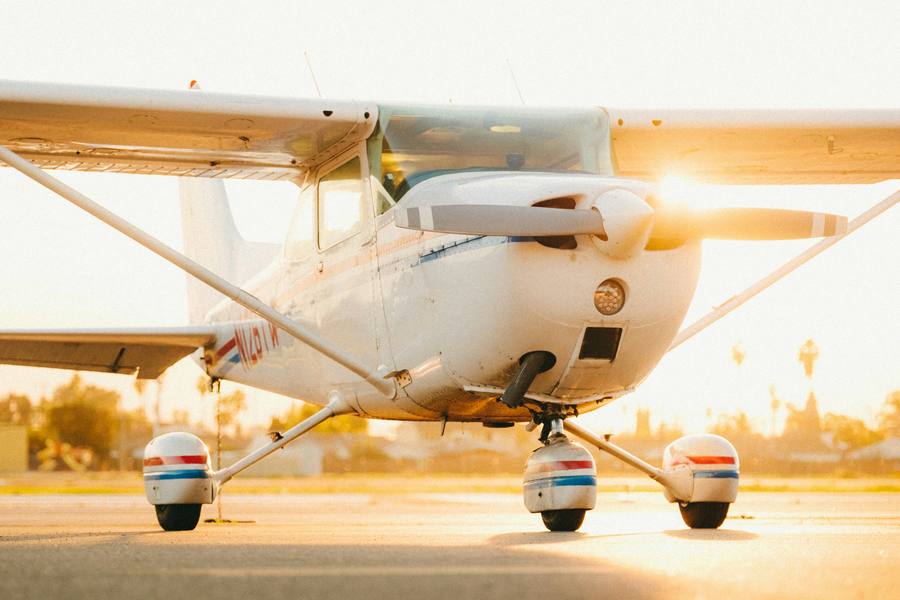
An aircraft that uses a turf runway can pick up grass, soil and moisture on the belly, wheel areas and lower fuselage, in addition to the exhaust and oil residue every piston aircraft collects. The FAA’s corrosion control advisory circular treats regular cleaning as part of an overall corrosion control program, since contaminants can hold moisture against surfaces. Cleaning does not prevent corrosion on its own, and it does not replace inspection. It does make it easier for the owner and the mechanic to see what is there.
Belly and wheel-area cleaning stays cosmetic. Removing wheel fairings, inspection panels or other components is maintenance and belongs to the owner where regulations allow, or to a certificated mechanic. Understanding aircraft belly grime covers what causes it and how it is usually approached.
Picking a scope
For an owner-flown aircraft based outside the metro, a common pattern is a thorough exterior cleaning and cabin refresh a few times a year, timed around heavy flying, seasonal changes or a planned trip. If the aircraft regularly visits a metro field, a recurring care plan can be tied to those visits instead of a calendar. The aircraft’s maintenance manual and its paint, transparency and interior manufacturers set the limits on products and methods.
Requesting a quote from Huntsville
Tell us whether you would prefer work at H34 or during a stay at another field, what facilities you know are available at home (hangar, water, power), the aircraft make and model, and how often it flies to the metro. Use the quote request form and we will discuss which option looks more practical and what would need to be confirmed first.
Sources
- Huntsville, Madison Co. Regional (H34) (Arkansas Department of Commerce, Division of Aeronautics)
- Huntsville Municipal Airport (H34), FAA airport information (AirNav)
- Advisory Circular 150/5190-8, Minimum Standards for Commercial Aeronautical Activities (Federal Aviation Administration)
- Advisory Circular 43-4B, Corrosion Control for Aircraft (Federal Aviation Administration)
This article is general information about cosmetic aircraft care. It is not maintenance guidance. Your aircraft's manufacturer documentation and your maintenance provider take precedence.